How Civic Consciousness Shapes Democratic Resilience
Book Project
How does participation in civil society—both formal organizations and informal social groups—shape democratic preferences, polarization, and political engagement?
The literature on civil society and backsliding largely focuses on groups that either mobilize in support of, or in opposition to, backsliding incumbents. I take a more nuanced approach, considering the range of relationships that civil society may have with these governments. I do so via disaggregating binary distinctions between “opposition” and “supporters” to consider the variety of civic life across different levels of formalization, size, missions, and funding.
To reconcile these two competing approaches, I argue that we must understand how civil society conceives of itself and its capacity to use its social capital. I develop a theory of “civic consciousness,” contending that not all of civil society consciously thinks of itself as belonging to ‘civil society' and therefore does not always recognize its civic resources. I theorize and demonstrate how this consciousness is lowest for groups with more informal structures or apolitical missions, as compared to their more formal or political counterparts. I illustrate how informal and apolitical civil society is less legible to autocratizing governments, and thus more likely to retain its autonomy. Finally, I show how the process of autocratization facilitates increased civic consciousness among informal and apolitical civil society, which become more likely to build cross-cutting ties, engage on local political issues, and activate in support of democracy.
In support of my theory, I present the most systematic evidence of civic life in a declining democratic context to date. The core case of the study, Poland, includes evidence collected over 1.5 cumulative years of fieldwork spanning organizational histories, grant applications, and volunteering reports, as well as the stated and elicited perspectives of citizens, civic groups, and regime members in both surveys and interviews. The dissertation also draws on a well-developed shadow case in Hungary, replete with extensive interview and survey evidence. I also demonstrate the external validity of my findings using original surveys fielded in six additional countries that experienced democratic erosion and newly linked cross-national data on civic participation and crises. Drawing on an array of observational and experimental causal inference techniques, alongside text-as-data methods, I discern precise causal estimates of the elite, group, and individual effects of civic consciousness, which are complemented by rich qualitative and quantitative explorations of the underlying mechanisms.
Ultimately, this project’s central contribution is to show concretely where and how informal and apolitical civic life recognizes its latent social capital and applies this toward democratic ends. I contribute to the literatures on democracy, polarization, and civic engagement, offering fresh insights into the puzzle of why aspiring autocrats struggle to dominate society.
My dissertation was awarded the 2025 Kahin Prize in International Relations by the Cornell Department of Government, for the “most promising dissertation on foreign politics.” It has also been generously supported by the Title VIII Research Fellowship, Hoover Institution, APSA Centennial Center, and, at Cornell, the Center on Democracy, Institute for European Studies, Center for Social Sciences, and Roper Center for Public Opinion Research.
I am happy to share draft chapters or a book outline upon request.
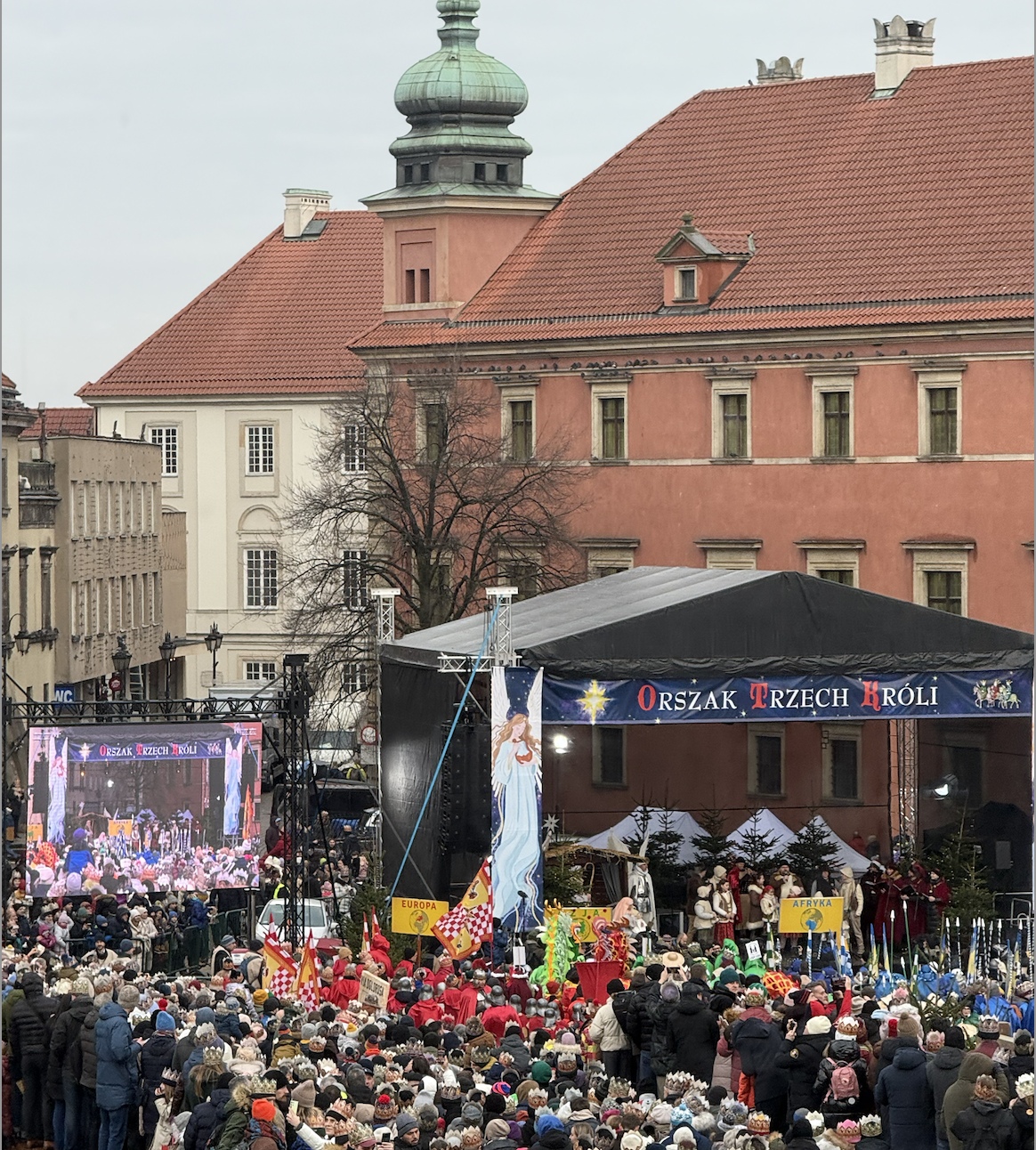
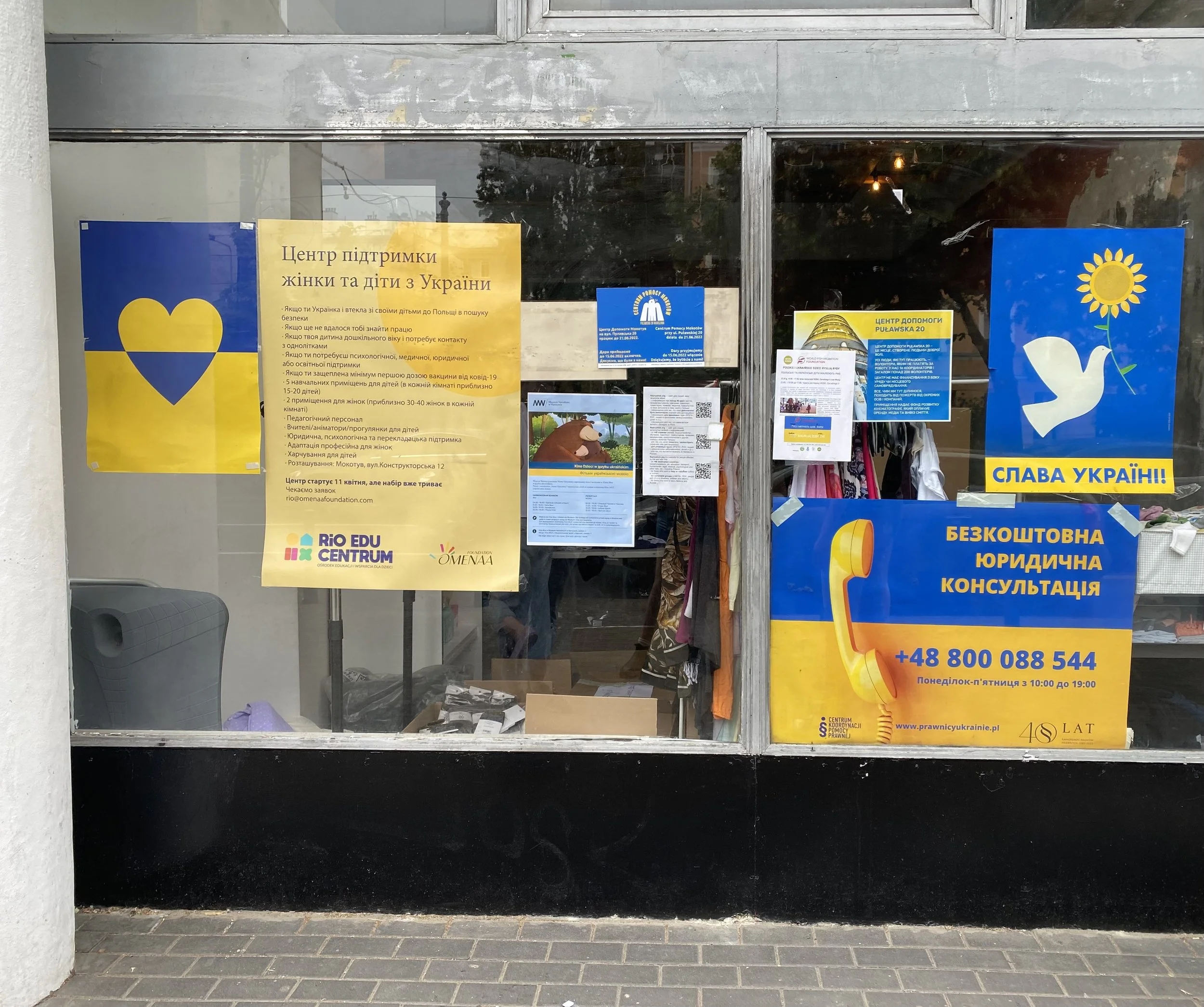

Photos taken by author at assorted civic events. From top to bottom; Three Kings Day March (Warsaw, 2025); Mokotów “Free Shop” for Ukrainian refugees (2022); knitting projects at community organization in Gdańsk (2025).